Short answer
Choose a mini iron if you mostly want flexibility on small pieces, edges, and controlled touch-ups. Choose a household iron if you want steadier coverage and faster progress on medium or large pieces. Beginners do not automatically need a mini iron first.
- Mini irons feel nimble but cover less area at a time.
- Household irons are steadier over larger surfaces but less surgical on tiny details.
- Your usual project size matters more than which tool looks more specialized.
The main differences between the two
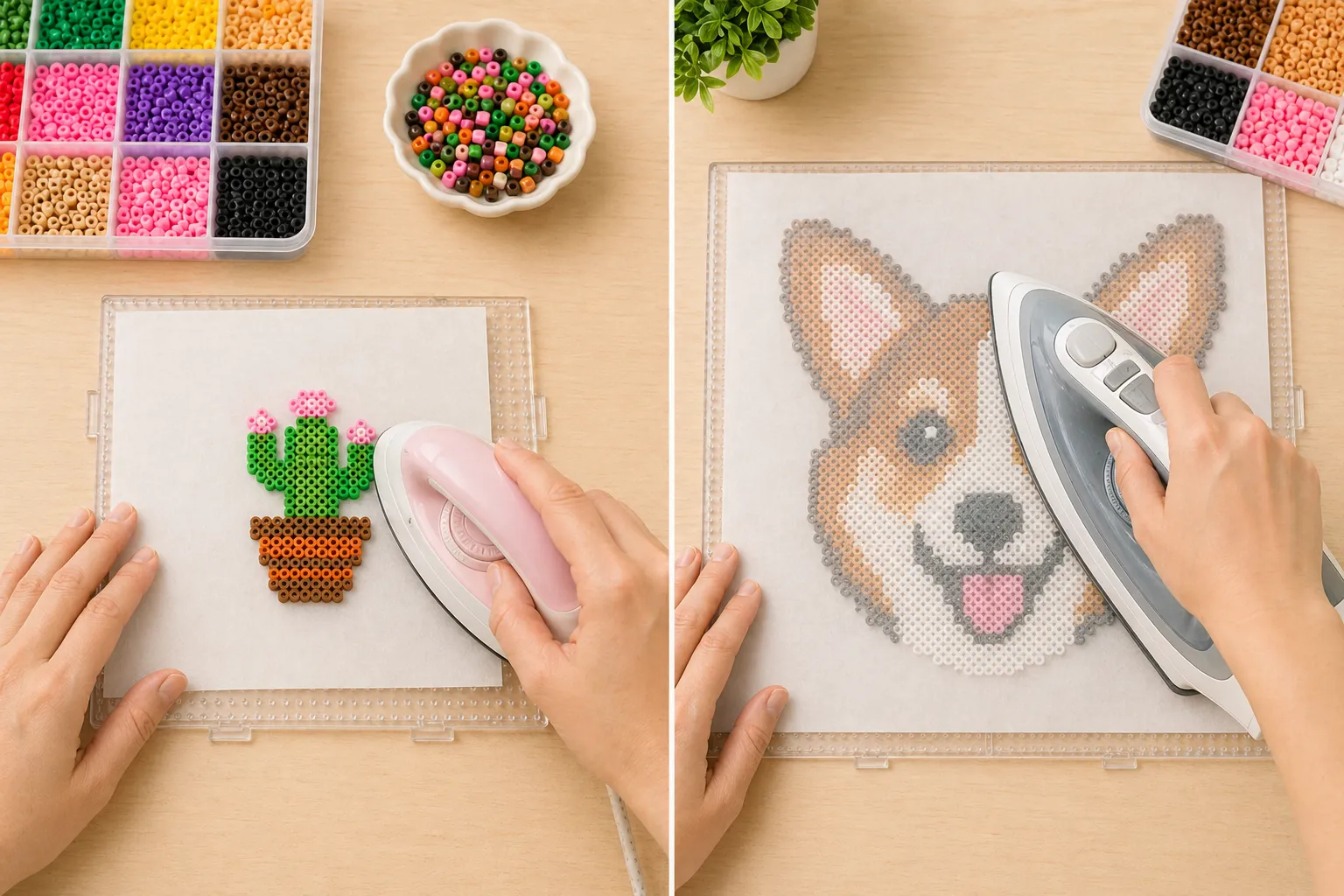
Mini irons are easier to steer around small shapes, narrow areas, and touch-up zones. The tradeoff is that you need more passes to spread heat across a larger surface evenly.
Household irons give you a broader stable hot face, which helps on medium and large pieces. The tradeoff is that they can affect more of the design at once.
What beginners should evaluate first
- Are you making small charms or larger multi-board pieces?
- Do you need finer local control or faster even coverage?
- Do you already have a household iron you can test with before buying something new?
Which situations fit each tool better
Mini irons are often better for small 5mm pieces, detailed edges, one-side ironing, and targeted touch-ups.
Household irons usually make more sense for larger flat pieces, heavier melts, and projects where even overall coverage matters more than tiny local precision.
- Small pieces and touch-ups: lean mini iron.
- Medium or large pieces and smoother overall passes: lean household iron.
- If you are unsure, testing a normal household iron first is often the cheapest move.
The practical buying mistake to avoid
A mini iron does not magically lower failure rates. If the temperature is unstable or your movement is poor, it can still overwork an area very quickly.
A household iron is not automatically clumsy either. Once you build timing and movement discipline on small test pieces, it can be very reliable.