Resposta curta
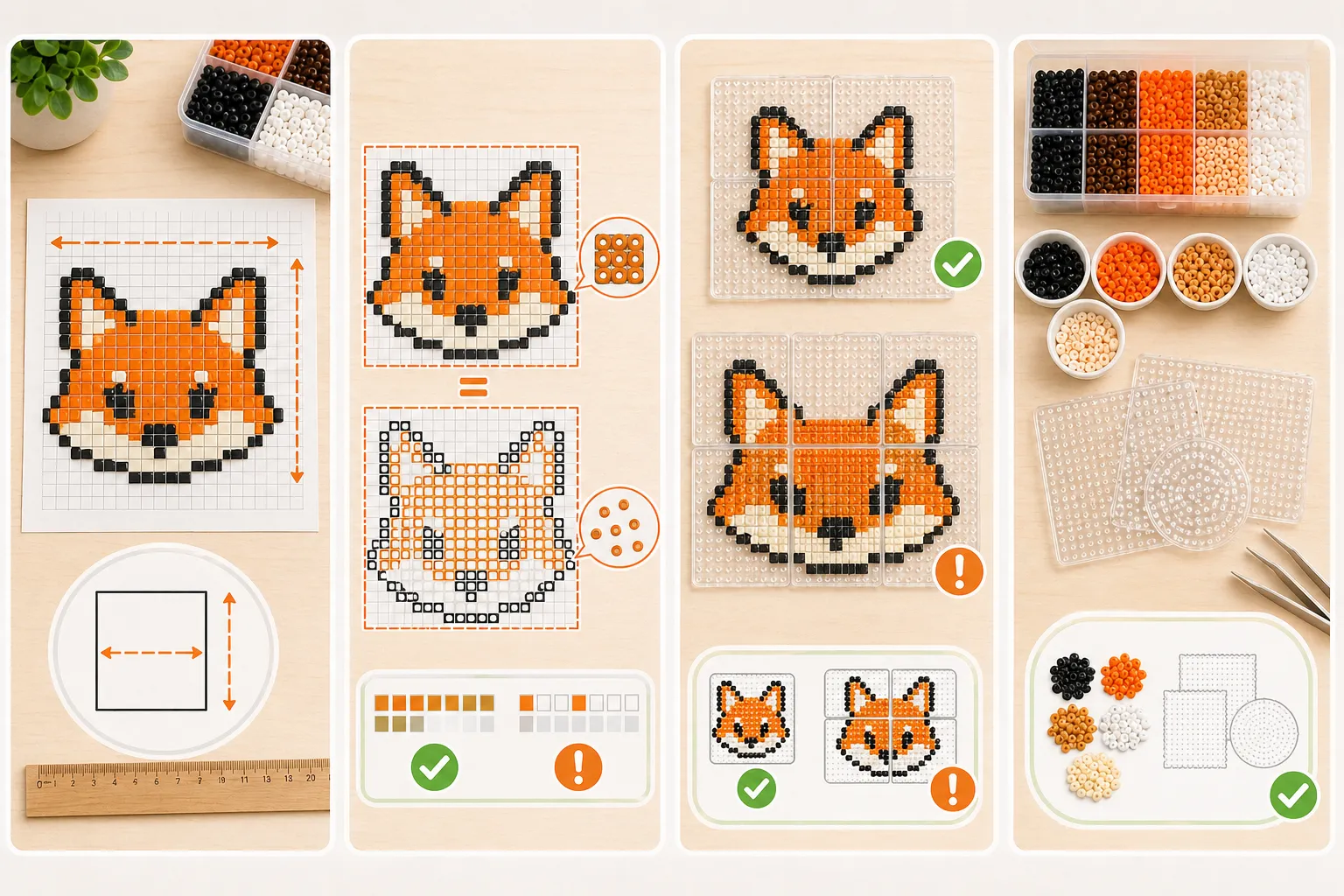
Comece vendo largura, altura e a área realmente preenchida do molde e compare isso com a área útil das placas que você tem. Para os beads, não olhe só o retângulo externo: considere também a densidade do preenchimento e uma folga nas cores principais.
- Parta das medidas reais, não de uma impressão rápida.
- A quantidade de beads depende tanto do preenchimento quanto do tamanho externo.
- Planejar placas é pensar em área útil, não só em número de placas.
- Uma margem prática ajuda mais do que tentar acertar tudo no limite.
Ler primeiro o tamanho real e a área preenchida
The first step is knowing how wide and tall the pattern actually is and how much of that space is truly occupied. Some designs look compact at a glance but spread in awkward ways once you account for protrusions and empty space.
If you are using an editor or export preview, inspect both the dimensions and how the main mass is distributed before you start estimating materials.
Estimar beads pelo preenchimento real, não só pelo quadro
A better bead estimate starts from the cells that are actually filled rather than from the outer rectangle alone. A large design with a lot of open background can need far fewer beads than its overall width and height suggest.
If you cannot yet count every color precisely, at least split the estimate into total filled beads and extra margin for the major colors or areas that are more likely to need correction.
- Estimate total fill first, then refine the important colors.
- Main body colors and outline colors usually deserve more margin.
- Fragmented patterns tend to consume more correction time and materials.
Por que a quantidade de placas é fácil de subestimar
Board planning goes wrong when people judge only by overall area. What matters is the usable placement area of the boards you actually own, plus whether the pattern has ears, weapons, diagonal extensions, or other projections that force awkward spanning.
Two designs can have a similar total footprint while needing very different board setups because one is compact and the other is spread out.
- Compare the design against the real usable area of your boards.
- Compact rectangular designs are often more board-efficient.
- Once the project becomes multi-board, alignment and flipping also get harder.
Estimar também tempo e risco
Some projects are affordable in beads but expensive in time, attention, and failure risk. For beginners, multi-board builds, many colors, and fragmented edges often cost more energy than the raw bead count suggests.
That is why the best estimate also asks whether the project is simply too large for where you are now.
Erros comuns de estimativa
- Looking only at width and height without checking how empty or fragmented the design is.
- Ignoring the real usable area of your specific boards.
- Buying exactly the theoretical amount with no buffer.
- Estimating materials without estimating multi-board handling risk.