Short answer
There is no single correct way to finish the same fuse bead pattern. If you want a more display-oriented result with clearer bead texture, you usually lean lighter. If you want something more durable for handling or everyday use, you usually accept a sturdier, more conservative finish. The first choice is not the pattern. It is what you want the piece to become.
- The same pattern can change dramatically in appearance, strength, edge feel, and usability.
- Half melt and full melt are not about which is more advanced. They are about fitness for the end use.
- Keychains, coasters, and display pieces should not be judged by the same standard.
- For beginners, the safest finish is usually the one with better stability, not the most extreme visual effect.
Why the same pattern can produce very different finished results
The pattern defines the color map and silhouette, but the finished personality of the piece is shaped by heat level, edge treatment, backing, and whether the result is meant for display or regular use. Many comparisons are really not about which pattern is better. They are about which finished goal is different.
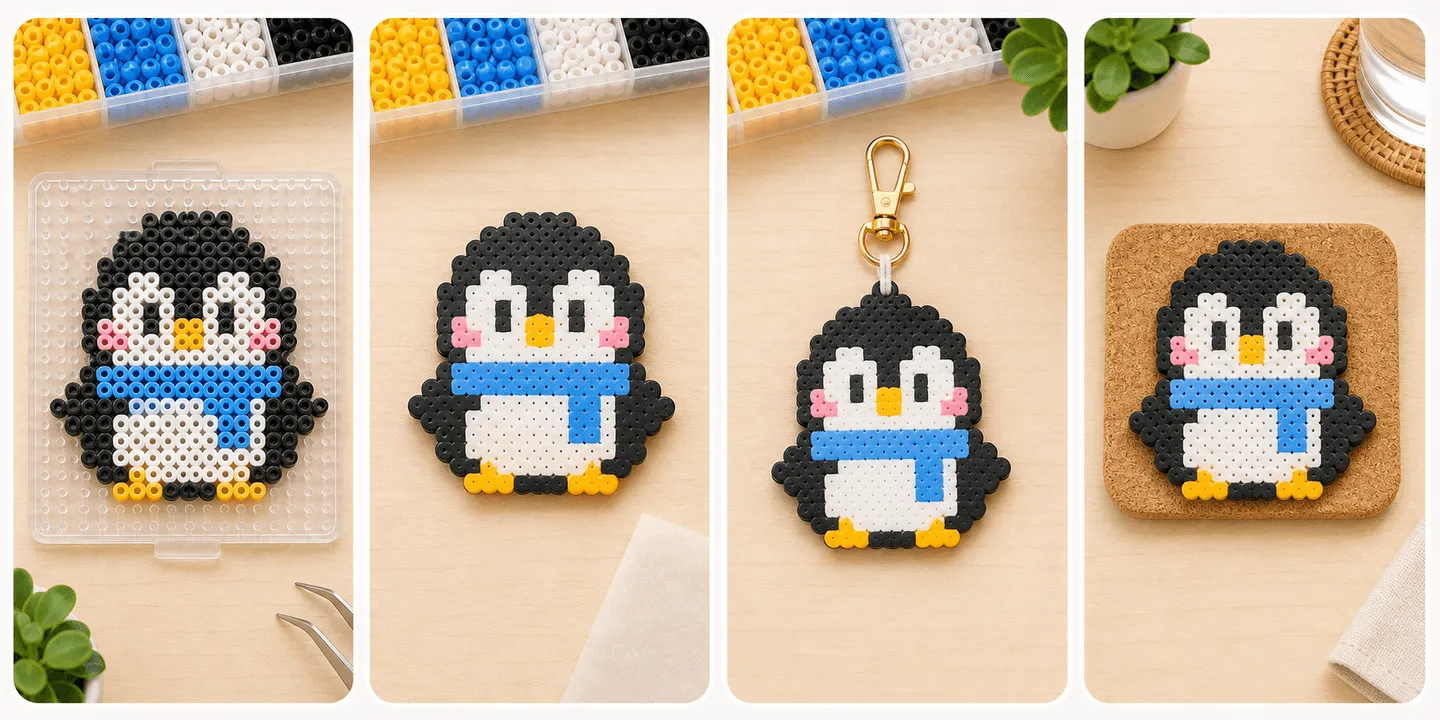
A character design finished as a light half-melt display piece can feel crisp and bead-like. The same pattern finished as a keychain or coaster has to answer a different question: will it stay stable when handled, pressed, bumped, or carried around?
- The same pattern does not imply the same finishing logic.
- Display pieces care more about surface style, while use pieces care more about structural stability.
- Once the use changes, the best finish often changes with it.
The core difference between half melt, full melt, single-side, and double-side approaches
Half melt usually keeps more bead identity, visible holes, and pixel texture, which is why many people feel it looks more like bead art. The tradeoff is that it can leave less structural margin, especially for items that will be handled often or exposed to repeated stress.
A fuller or more conservative finish often gives up some lightness and bead definition in exchange for stronger structure, firmer feel, and more tolerance in daily use. Single-side and double-side decisions are similar: the right choice depends on whether front appearance or overall stability matters more for this piece.
- Half melt is often more display-oriented, while fuller fusion is often more utility-oriented.
- Single-side finishing often favors front-side appearance, while double-side logic often favors overall stability.
- Fragile silhouettes with thin bridges usually have less room for extreme light finishing.
Why keychains, coasters, and display pieces need different standards
Keychains get bumped, swung, gripped, and packed into bags, so the main risk is not whether they look exactly like the reference. It is whether the edges, attachment area, and local joints can survive repeated handling.
Coasters care more about flatness, stability under pressure, and how well they resist long-term warping. Display pieces give you more freedom to keep texture and bead definition because they usually carry less daily stress.
- Keychains should be judged by edge durability and stress points.
- Coasters should be judged by flatness, stability, and warp resistance.
- Display pieces are the easiest place to prioritize surface style.
Why edges, back treatment, and support change the feel of the piece
A lot of finished-result differences do not come only from lighter or heavier melting. They come from whether the edges feel delicate or solid, whether the back looks controlled or rough, and whether the whole piece feels light and display-like or dense and practical in the hand.
That is why front-only comparison photos can be misleading. Edge thickness, corner survival, backing treatment, and stress-area support often explain the real difference between two versions much better than the front view alone.
- Edge condition strongly affects both premium feel and durability.
- Back support changes whether the object feels more like a display piece or a functional item.
- The hand feel is often more different than the front photo suggests.
If you want X result, which direction usually makes more sense?
If you want the piece to feel more pixel-clean and bead-defined, you usually move toward a finish that preserves more bead texture and visual detail. If you want a more durable everyday object, you usually move toward a finish that accepts stronger fusion, more stability, and fewer fragile points.
A useful comparison page does not claim one finish is always best. It helps translate vague goals like “better looking” into clearer ones: flatter, stronger, thicker, more bead-like, more pixel-like, or more forgiving in use. Once that goal is clear, the finishing decision becomes much easier.
- Want more bead character: lean toward a display-oriented finish.
- Want more durability: lean toward stability, flatness, and practical use tolerance.
- Want a balanced result: start with a moderate finish before chasing extremes.
The safest default choice for a beginner comparison build
If you do not yet have a stable feel for heat control, the riskiest move is often chasing the lightest, thinnest, most texture-preserving finish right away. That kind of result is not easy because it uses less heat. It is hard because it depends on knowing exactly when to stop.
A safer default is to choose a clean, structurally regular pattern, decide the use first, and then stay closer to a middle-ground finish. Build the habit of finishing pieces that are stable and successful first. The more stylized surface experiments can come after that.
- Set the use case before you set the surface style.
- For a first comparison, choose the higher-tolerance middle option.
- A stable finished piece is a better first win than the most dramatic effect.
FAQ
Is half melt always better looking than full melt?
Not automatically. Half melt keeps more bead texture, but the better-looking result depends on whether you want a display feel or a sturdier use piece. For objects that will be handled often, a stronger finish may be the better choice.
Can the same pattern work as both a keychain and a coaster?
Sometimes, yes, but the finishing logic is usually not identical. Keychains care more about stress points and edge durability, while coasters care more about flatness and full-piece stability.
Why do some projects look similar in photos but feel very different in real life?
Because front-view photos hide edge thickness, back treatment, stress handling, and overall rigidity. A lot of finish difference only becomes obvious when you hold or use the piece.
What is the safest first finish comparison for a beginner?
Choose a pattern with a clear use case and regular structure, then finish it with a moderate, higher-tolerance approach instead of chasing the lightest possible effect immediately.